Ecotone兼容並續Interdisciplinary Sustainability ForumBecome a speaker

Ecotone · Volume I · Lecture series

Sustainable Urbanization? Rewilding?

How cities and nature might share the same ground

Cities keep growing and nature keeps retreating. Is sustainable urbanization really possible, or should we turn it around and give some of the land back to nature? This lecture series brings together five speakers from ecology and climate science, the digitization of nature, Sinophone literature, landscape architecture and clinical dentistry, each answering the same pair of questions from their own field.

Attendance Two sessions on two days: Monday 16 November, 18:30–21:00, at NTU’s Gongguan campus, and Tuesday 17 November, 13:30–16:30, at NYCU’s Hsinchu campus. Register below. Sessions & registration

Plate: the city park as an ecotoneEngraving-style illustration of the edge of a city park in Taipei. On the left, towers and paving; moths circle a streetlamp and a field notebook lies open on a bench. The paving ends at a dashed cinnabar line; beyond it grow a banyan with hanging aerial roots, wild grass and a pond. One building carries a garden on its roof, a small environmental sensor station stands in the grass, and a burying beetle crosses the soil.PL. IECOTONUS · URBS ET SILVAFicus microcarpaLIMES · where the paving ends12345Urbs et silva: a city park & its border dwellers25°02′N 121°32′E
Loupe × 2.4
Pl. I Urbs et silva: the edge of a city park, where paving gives way to a banyan (Ficus microcarpa), a pond and wild grass. Taipei.The meeting of city and nature is not somewhere far away; it begins where the paving of a park ends. Move your mouse to look through the hand lens, or press the numbers below to magnify a detail.
  1. 1Burying beetle Nicrophorus · the cleaner in the heat island
  2. 2Moths Heterocera · a night rewritten by the streetlamp
  3. 3Field notebook · how we write nature down
  4. 4Roof garden · the wild returning to high places
  5. 5Sensor station · where technology meets nature

Event details

Date
November 202616 Nov NTU · 17 Nov NYCU
Venue
NTU Gongguan campus · NYCU Hsinchu campus
Format
Talks + conversationAbout 2.5–3 hours per session
Language
Mandarin + English

Vol. 01Registration

Sessions & registration

Please noteWe would love to see you there. Please take a moment to register, so we can let you know right away if the time or venue changes.

  1. Vol. 01 · Session I

    NTU session

    Venue
    National Taiwan UniversityGongguan campus · Global Change Research Center, Room G202
    Date
    Mon 16 November
    Time
    18:30–21:00
  2. Vol. 01 · Session II

    NYCU session

    Venue
    National Yang Ming Chiao Tung UniversityHsinchu campus · Room to be confirmed
    Date
    Tue 17 November
    Time
    13:30–16:30

Plate I: Crossings in this volume

Atlas of Crossings: fields float above; in the middle, each speaker is a knot on one shared rhizome; below lie the places where they work. Every root is a real connection. The full list follows the figure.↑ fields↓ placesHistoryHs · openFinanceFn · openLawLw · openPoliticsPl · openElectrical Eng.Ee · openMechanical Eng.Me · openAgricultureAg · openFisheriesFs · openSportsSp · openMusicMu · openFine ArtsAr · openDanceDn · openEducationEd · openLiteratureLtTechnologyTcMedicineMdEcologyEcClimateClLandscape DesignDsTaipei25°01′N 121°32′ECambridge, MA42°22′N 71°07′WHualien23°54′N 121°32′ESingapore1°17′N 103°51′ETaiwan≈ 24°12′N 120°54′ESendai38°15′N 140°52′ESyuan-Jyun SunWei-Ping ChanNa YenSALAD DressingHank WangAtlas of Crossings: fields float above; in the middle, each speaker is a knot on one shared rhizome; below lie the places where they work. Every root is a real connection. The full list follows the figure.↑ fields↓ placesLiteratureLtTechnologyTcMedicineMdEcologyEcClimateClLandscape DesignDsTaipei25°01′N 121°32′ECambridge, MA42°22′N 71°07′WHualien23°54′N 121°32′ESingapore1°17′N 103°51′ETaiwan≈ 24°12′N 120°54′ESendai38°15′N 140°52′ESyuan-Jyun SunWei-Ping ChanNa YenSALAD DressingHank Wang

Vacant fields History, Finance, Law, Politics, Electrical Eng., Mechanical Eng., Agriculture, Fisheries, Sports, Music, Fine Arts, Dance, Education

Vol. 01 touches 6 of 19 fields and 6 places.
Desiderata · Wanted01 / 12

Lw LawAg Agriculture

“Does soil have rights?”
The next speaker may well come from your field.

Vol. 01 · Contents

Programme

The running order is provisional. Final times will be published once the date is confirmed.

  1. Opening

    Chan, Wei-Ping (詹偉平) opens the event; Sun, Syuan-Jyun (孫烜駿) sets out the theme through the lens of urbanization.

  2. Raising the Next Generation under Environmental Change: Behavioural Plasticity and Adaptation in Burying BeetlesTalk 1

    Sun, Syuan-Jyun (孫烜駿)

  3. Repeating a 50-Year-Old Experiment: How Light at Night Affects Moths’ Attraction to LightTalk 2

    Chan, Wei-Ping (詹偉平)

  4. Break
  5. Nature through Human Eyes: How We Understand, Treat and Record ItTalk 3

    Yen, Na (顏訥)

  6. Rewilding: Making a Little Room for NatureTalk 4

    SALAD Dressing: Goh Yu Han (吳煜涵), Wong Mee Na (黃美娜), He Xinrui (何欣蕊)

  7. Closing conversationPanel

    Moderated by Hank Wang (王鼎涵). The speakers and the audience in conversation.

Speakers §: Speakers in this volume Each with many identities

Ecotone · SpeakerVol. 01 · Sustainable Urbanization? Rewilding?
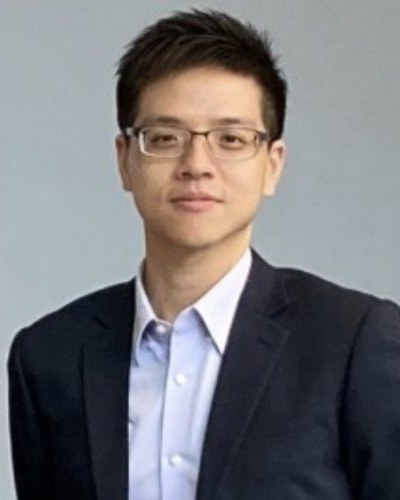
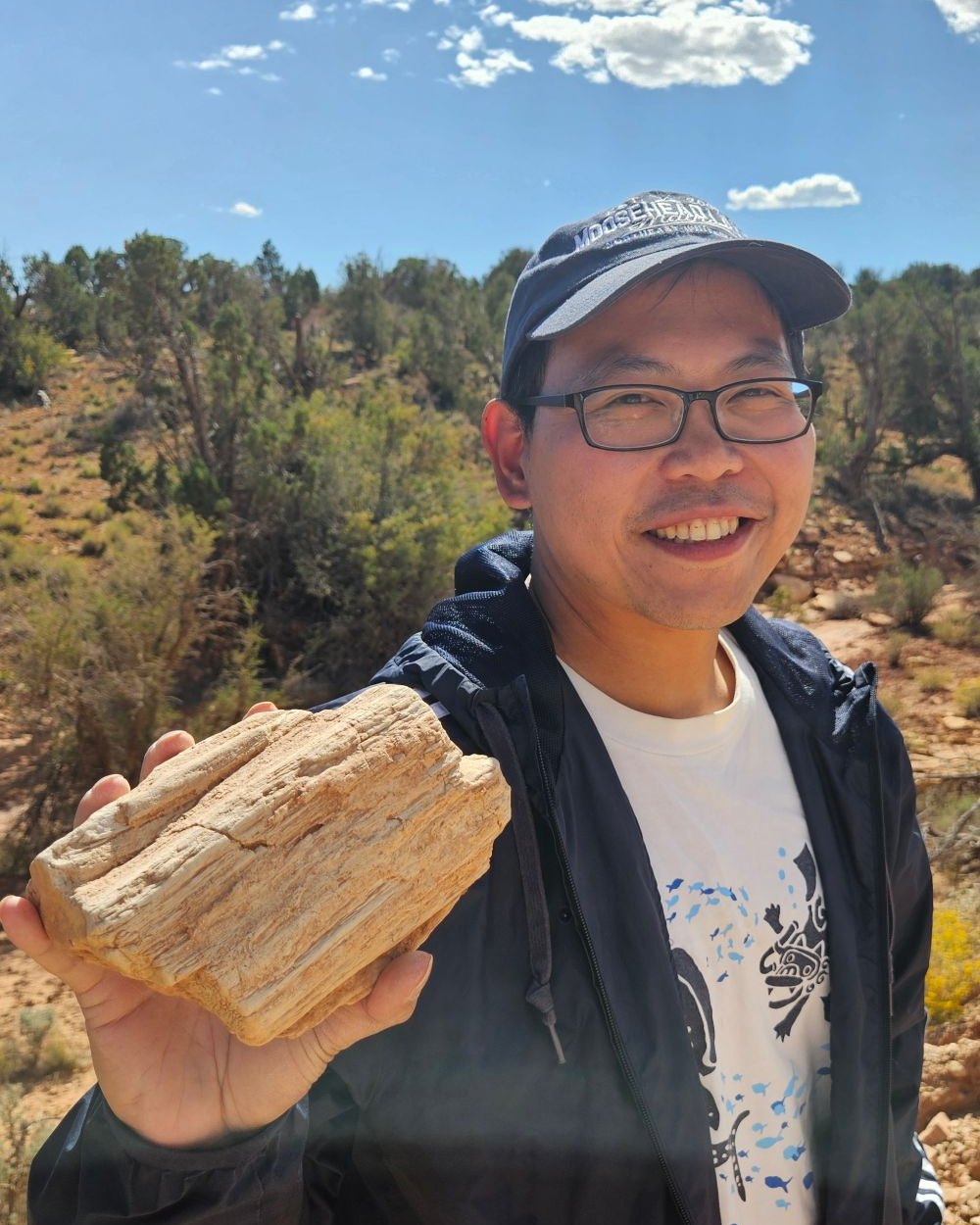
Portrait of Syuan-Jyun Sun
  1. I. Identity1 / 1
    Assistant Professor, International Degree Program in Climate Change and Sustainable Development, National Taiwan University

    Studies how living things respond to a rapidly changing climate, from individual behaviour through populations to whole communities.

When we talk about climate change, we often see only the temperature curve. Professor Sun’s research is about the lives behind that curve, which are adjusting, cooperating, even evolving. Speaking as a scientist, Professor Sun will pose a question no discipline can sidestep: how do living systems cope?

Syuan-Jyun Sun

Climate Change · NTUECO-S-01 · Loc. Taipei 25°01′N 121°32′E

Highlights

  • PhD, University of Cambridge
  • Showed experimentally that a 2°C rise in temperature erodes the protection burying-beetle parental care gives offspring
  • Surveyed 180+ sites across northern Taiwan, showing that urbanisation and urban heat reduce burying-beetle populations

Selected works

  • Insect adaptation to urban environments: A synthesis of morphological, behavioural, and physiological responses. Current Opinion in Insect Science (2026)
  • Climate-mediated cooperation promotes niche expansion in burying beetles. eLife (2014)
  • Temperature stress induces mites to help their carrion beetle hosts by eliminating rival blowflies. eLife (2020)
  • Heat stress effects on offspring compound across parental care. Proceedings of the Royal Society B (2025)
Talk
Raising the Next Generation under Environmental Change: Behavioural Plasticity and Adaptation in Burying Beetles

Ecotone · SpeakerVol. 01 · Sustainable Urbanization? Rewilding?
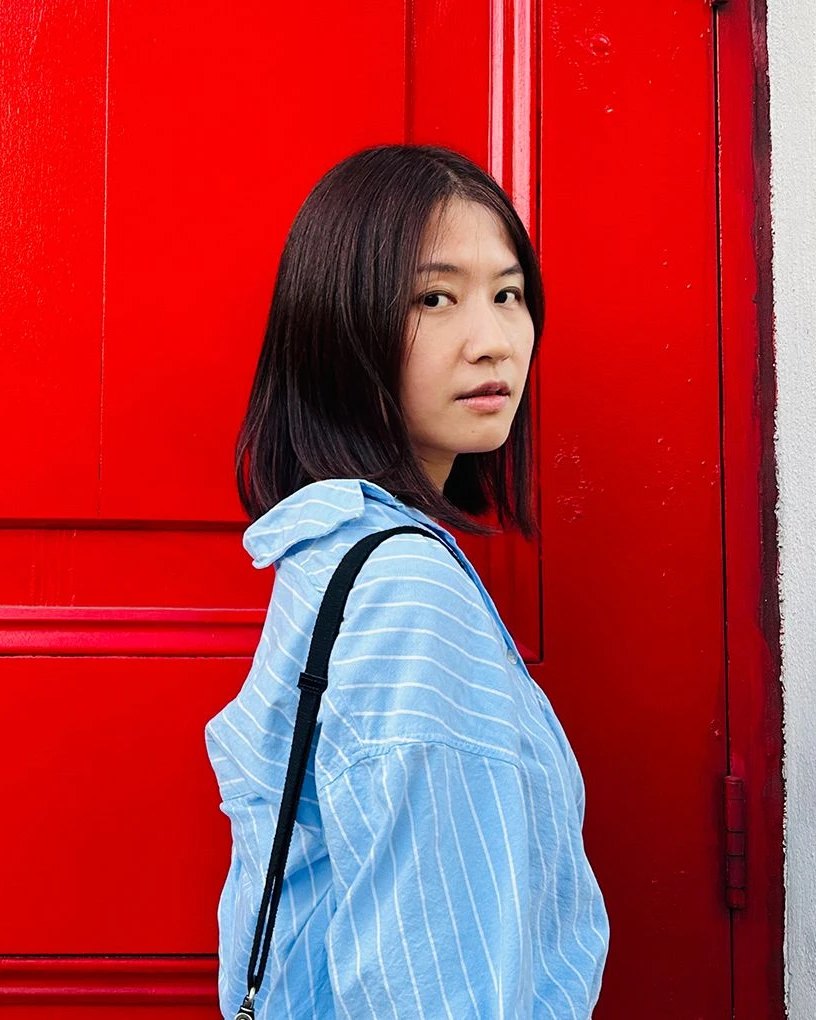
Portrait of Wei-Ping Chan
  1. I. Identity1 / 3
    Founder, SOS Foundation

    Sustainability Of Sustainability: bringing science, art and digital innovation together so that sustainability itself can be sustained.

  2. II. Identity2 / 3
    Founder & CEO, BioNarr

    Building portable, high-throughput systems that record, digitize and sense nature, from the microscopic to the landscape scale.

  3. III. Identity3 / 3
    Harvard OEB Associate

    Department of Organismic and Evolutionary Biology (OEB), Harvard University. Previously researched the 3D digitization of natural history collections and the effects of artificial light at night on moths, at the Museum of Comparative Zoology and the Rowland Institute.

Nonprofit, startup, academia: three worlds that usually regard one another with suspicion, and Wei-Ping Chan works in all of them at once. This talk starts from artificial light at night (ALAN): what happens to night-flying insects and ecosystems as city lights spread further, and how to do research across landscapes where the urban meets the rural.

Wei-Ping Chan

SOS · BioNarr · HarvardECO-S-02 · Loc. Taipei 25°01′N 121°32′E ⇄ Cambridge, MA 42°22′N 71°07′W

Highlights

  • Built a high-throughput multispectral imaging system that has digitized more than 18,000 museum specimens
  • Repeated a half-century-old experiment to compare, and disentangle, why moths are becoming less attracted to light
  • PhD in Organismic and Evolutionary Biology, Harvard University

Selected works

  • Climate velocities and species tracking in global mountain regions. Nature (2024)
  • Seasonal and daily climate variation have opposite effects on species elevational range size. Science (2016)
  • Historical behavioural data disentangle evolutionary and environmental drivers of recent declines in insect attraction to light. Proc. R. Soc. B (2025)
  • A high throughput multispectral imaging system for museum specimens. Communications Biology (2022)
Talk
Repeating a 50-Year-Old Experiment: How Light at Night Affects Moths’ Attraction to Light
Ecotone · SpeakerVol. 01 · Sustainable Urbanization? Rewilding?
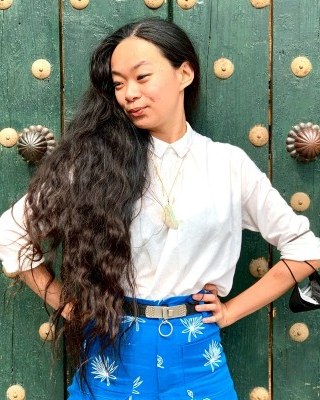
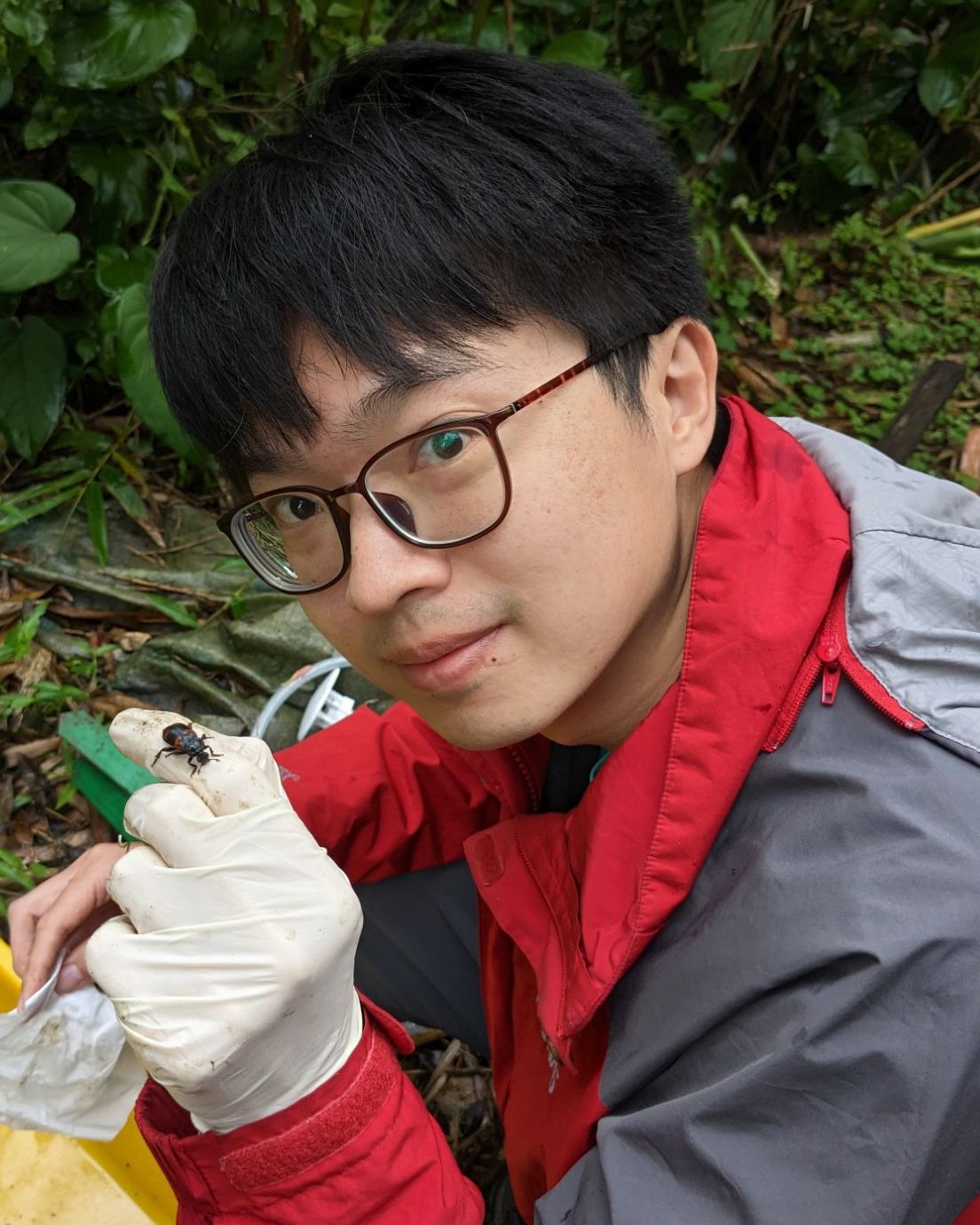
Portrait of Na Yen
  1. I. Identity1 / 2
    Assistant Professor, Department of Sinophone Literatures, National Dong Hwa University

    Works through literature and writing on the relationships between people, the land and their times.

  2. II. Identity2 / 2
    Writer

    Essayist, author of You hun ne ne (2017) and Faux-cul (2024).

If science answers the question “what happened?”, literature answers “how do we feel it?” In a forum full of data and models, Na Yen brings a different kind of precision: the precision of language. Because a crisis we can’t narrate is a crisis we can’t feel.

Na Yen

Literature · NDHUECO-S-03 · Loc. Hualien 23°54′N 121°32′E

Highlights

  • PhD in Chinese Literature, National Tsing Hua University
  • Former visiting scholar in East Asian Languages and Civilizations at Harvard, and postdoctoral scholar at the Institute of Chinese Literature and Philosophy, Academia Sinica
  • Researches cross-species emotional bonds in biji writing from the Song and Yuan onwards, and how marine ecological knowledge was produced in Lingnan
  • 2024 Lingnan Culture Research Award, The Chinese University of Hong Kong; Lin Rong-San Literary Award
  • Long-time guest host of the podcast 違章女生 Lalaland

Selected works

  • You hun ne ne (幽魂訥訥), essays, INK Publishing, 2017
  • Faux-cul (假仙女), essays, 2024
  • Co-author, 《百年降生:1900-2000台灣文學故事》 (stories of Taiwanese literature, 1900–2000)
  • Co-author, 《她們在移動的世界中寫作:臺灣女性文學的跨域島航》 (on Taiwanese women’s literature)
Talk
Nature through Human Eyes: How We Understand, Treat and Record It
Ecotone · SpeakerVol. 01 · Sustainable Urbanization? Rewilding?
  1. I. Identity1 / 2
    Landscape architecture practice, Singapore

    Concerned with rewilding, experience curation and digital environmental sensing (Digital Umwelt).

  2. II. Identity2 / 2
    A view from Singapore

    In the dense “Garden City”, thinking about how a city can let nature run wild again.

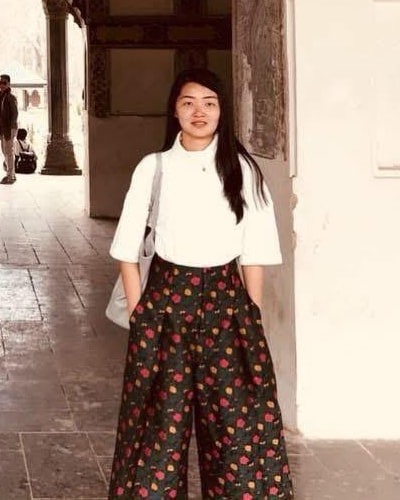
SALAD Dressing is a landscape architecture practice in Singapore. The studio exhibited in the Singapore Pavilion at the 2021 Venice Architecture Biennale, designed the landscape of the Singapore Pavilion at Expo 2020 Dubai, and showed Rewilding the Sky at Melbourne Design Week. From Singapore, Goh Yu Han, Wong Mee Na and He Xinrui bring a question: what if the city itself is the ecotone?

SALAD Dressing

Landscape Architecture · Singapore
  1. Goh Yu Han · Director of Design
  2. Wong Mee Na
  3. He Xinrui
ECO-S-04 · Loc. Singapore 1°17′N 103°51′E

Highlights

  • Exhibited in the Singapore Pavilion at the 2021 Venice Architecture Biennale
  • Goh Yu Han was selected as an emerging-practitioner speaker for The Cultural Landscape Foundation’s Virtual Oberlander Prize Forum (2026)

Selected works

  • Singapore Pavilion, Expo 2020 Dubai (landscape design by SALAD Dressing); President’s Design Award, Design of the Year 2023
  • Exhibit in to gather: The Architecture of Relationships, Singapore Pavilion, 17th Venice Architecture Biennale (2021)
  • Rewilding the Sky, exhibition at Melbourne Design Week
Talk
Rewilding: Making a Little Room for Nature
Ecotone · SpeakerVol. 01 · Sustainable Urbanization? Rewilding?
Portrait of Hank Wang
  1. I. Identity1 / 4
    Associate Professor, College of Dentistry, NYCU

    Research spans tissue engineering for TMJ arthritis, the oral microbiota, and AI and extended reality (XR) in dental education and clinical care.

  2. II. Identity2 / 4
    Dentist and deputy superintendent

    Works on the clinical front line, running a healthcare setting that consumes a great deal of material and energy.

  3. III. Identity3 / 4
    OMIC

    Deputy Director of NYCU’s Oral Medicine Innovation Center (OMIC) since 2022, driving interdisciplinary research and innovation.

  4. IV. Identity4 / 4
    Sustainability Office

    Associate Executive Director of NYCU’s Office of Sustainable Development and University Social Responsibility since 2024, turning sustainability from a slogan into policy.

Healthcare is one of the industries least often included in conversations about sustainability, yet it is a major source of carbon emissions and waste. When one dentist has to run a clinic, do research and drive sustainability policy all at once, sustainability stops being an abstraction and becomes an operational decision made every morning.

Hank Wang

Dentistry · OMIC · SustainabilityECO-S-05 · Loc. Taiwan ⇄ Sendai 38°15′N 140°52′E

Highlights

  • Led an AI oral-health project that won Gold at the 2025 Taiwan Sustainability Action Awards and Silver at the Asia-Pacific Sustainability Action Awards
  • Visiting Associate Professor, Graduate School of Dentistry, Tohoku University, Japan (since 2022)

Selected works

  • SegmentAnyTooth: an open-source deep learning framework for tooth enumeration and segmentation in intraoral photos. Journal of Dental Sciences (2025)
Talk
Moderator, closing conversation
  • National Yang Ming Chiao Tung University

  • Tohoku University
  • Lab website

Atlas · Diverse Voices

Diverse Voices

Sustainability has never belonged to one group of people alone. We invite people of different ages, genders, ethnicities, schooling and occupations, from all over Taiwan and around the world, to each record a short film about what they hope interdisciplinary sustainability can become, do or change. The films are screened at the forum and collected in the Atlas.

Open the Atlas

The next volume’s speaker could be you.
We are looking for speakers who live across several disciplines and several countries.

Become a speaker CALL FOR SPEAKERS